Get Your Bitcoin Out of the Exchange!
”Not your keys, not your coins!”
Self-custody is the practice of holding your own Bitcoin private keys — taking full, direct ownership of your funds without relying on a third party. Your BTC lives on the blockchain; the wallet is simply how you interact with it.
True Ownership. You Hold the Keys. No Counterparty Risk.
What is Self-Custody?
When you leave Bitcoin on an exchange, you don’t actually own Bitcoin — you own an IOU. The exchange holds the keys. Self-custody means you hold the keys yourself, which means:
- No exchange can freeze your funds
- No platform going bankrupt can wipe out your savings
- No government pressure on a custodian can confiscate your coins

Why Self-Custody?

Bitcoin is Digital Gold
Bitcoin shares the same monetary properties that made gold the premier store of value for millennia — but improves on them significantly.
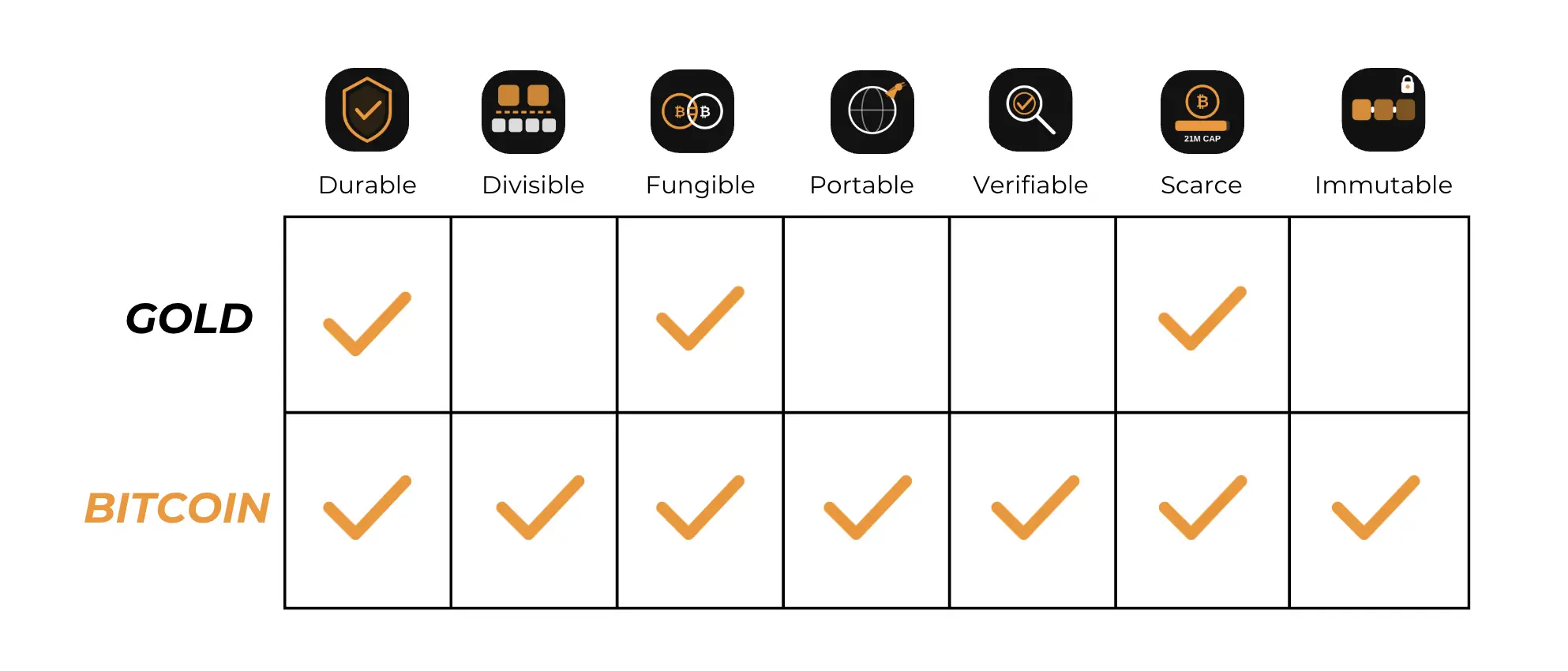
Bitcoin ETFs fall short on immutability — they are financial instruments that can be frozen, seized, or manipulated through the traditional financial system. When you hold Bitcoin directly, no third party can alter or confiscate it.
Gold matches Bitcoin on most properties, but Bitcoin’s portability and verifiability are unmatched — you can send any amount anywhere in the world in minutes, and anyone can verify the supply and transaction history.
How to Self-Custody
Types of Wallets
Hardware Wallet A dedicated physical device that keeps your private keys offline. The most secure option for long-term storage.
- Examples: Bitbox, Jade, ColdCard
Hot Wallet A software wallet connected to the internet. Convenient for everyday spending but more exposed to online threats.
- Examples: AQUA, Bluewallet, Blockstream Green
Paper Wallet Your seed phrase written or printed on paper (or stamped in metal). Completely offline but requires careful physical security.
- Examples: Generated via SeedSigner or Jade
Brain Wallet Memorising your seed phrase. Extremely difficult to do securely — not recommended for large amounts.
Custodial vs. Non-Custodial
| Custodial | Non-Custodial | |
|---|---|---|
| Who holds the keys? | The platform | You |
| Counterparty risk | Yes | No |
| Examples | Exchange wallets | AQUA, Bluewallet, Hardware wallets |
A custodial wallet means a third party controls your keys. A non-custodial wallet means you control them. For true self-custody, always choose non-custodial.
Note: Everything mentioned in this guide is intended for retail investors only. Businesses face complex regulations and legal requirements that make self-custody significantly harder and are beyond the scope of this guide.
Getting Started
- Choose a non-custodial wallet (AQUA or Bluewallet are great starting points)
- Write down your 12/24-word seed phrase on paper — never store it digitally
- Withdraw your Bitcoin from the exchange to your wallet address
- Once your stack grows, consider a hardware wallet (Jade, Bitbox, or ColdCard)
The barrier to self-custody has never been lower. There is no excuse to leave your Bitcoin on an exchange.
Acknowledgements
- Vittorio Ricatto — Bitcoin USI Club
- Samson Mow — JAN3
- Giacomo Zucco — Plan B